

Information disclosure in line with TNFD recommendations
Information disclosure in line with the recommendations of Task Force on Nature-related Financial Disclosure (TNFD)

The Taskforce on Nature-related Financial Disclosures (TNFD) is an international initiative to establish a framework for companies and financial institutions to appropriately assess risks and opportunities related to natural capital and biodiversity, and report and disclose them to investors. In September 2023, the Framework v1.0 was released.
At the Board of Directors meeting held in January 2025, the Company confirmed that it recognizes natural capital and biodiversity as important issues and will start initiatives based on TNFD.
In October 2025, we participated in the TNFD Forum, an organization that shares the latest information on TNFD and supports the establishment of an information disclosure framework. In January 2026, we registered with the TNFD Adopter, an organization that pledges information disclosure in line with TNFD.
This is the first time we have disclosed the results of our efforts to date, based on the data as of the end of March 2025.
[Reference]
TNFD Web page: https://tnfd.global/
TNFD Forum web page: https://tnfd.global/engage/tnfd-forum/
TNFD Adopter List Web page: https://tnfd.global/engage/tnfd-adopters-list/
General TNFD Requirements
1. Application of materiality
In addition to financial materiality, the Company analyzes and evaluates impacts on natural capital and biodiversity (impact materiality), and applies the concept of double materiality.
2. Scope of Disclosure
In this disclosure, the main subject of analysis is the direct operation of the sales of household electrical appliances and related products, which is the business of the Group (we have also conducted dependency and impact analysis of some upstream value chains).
We plan to analyze the entire value chain in the future.
3. Regions with nature-related issues
100 stores were selected from 552 stores directly operated (as of the end of March 2025), and regional characteristics were analyzed and evaluated using IBAT (Integrated Biodiversity Assessment Tool) *, a tool recommended by TNFD.
IBAT: A database developed by the IBAT Alliance, a biodiversity project in which the United Nations Environment Programme (UNEP) and other organizations participate
4. Integration of other sustainability-related disclosures
Although currently disclosed separately, the TNFD is a framework that is consistent with the TCFD, which is ahead of the TNFD, and climate change and natural capital / biodiversity are closely related. Therefore, the Company is considering integrating the disclosures in the future.
5. Period to be considered
In this Integrated Report, the short-term period is from now to 2026 years, the medium-term period is from 2026 to 2030 years, and the long-term period is from 2030 to 2050 years.
6. Engagement with indigenous peoples, local communities and affected stakeholders in the identification and assessment of the organization's nature-related challenges
Using the Global Compact Network Japan's CSR Procurement Self-Assessment Questionnaire, we conduct a questionnaire survey of our business partners to ascertain the impact on the human rights of our stakeholders.
As a member of the local community, we will promote our own environmental activities and engage with the local community.
Governance
The Company has established the Sustainability Committee for the purposes of sharing information on sustainability including natural capital and biodiversity across the entire Group, examining the response policy, promoting the response policy decided by the Board of Directors, and monitoring the progress.
The participants are the Company's Directors, the Presidents of each Group company, and the General Managers of each of the Company's General Managers. The chair of the committee is positioned as the person responsible for sustainability.
The results of these deliberations are reported to the Board of Directors, which then decides on a response policy.
The Board of Directors also receives reports from the Sustainability Committee on responses and progress, and oversees natural capital and biodiversity initiatives.
Based on this governance system, at the Board of Directors meeting in January 2025, the Company confirmed the start of initiatives based on TNFD reported by the Sustainability Committee and the TNFD response plan up to fiscal 2026.
Managing risk and impact
(Risk Management Process)
The Company will apply the "Our Group's Climate-related Management System and Risk Management Process" described in the "Information Disclosure in Line with the TCFD recommendations" to natural capital / biodiversity.
[Reference] K's Holdings Corporate Site Governance / Risk Management
https://www.ksdenki.co.jp/en/sustainability/environment/governance_risk/
The CSR Department uses the following "Process for Identifying Risks and Impacts" to identify dependence on nature, impacts, risks, and opportunities. The results are reported to the Corporate Planning Office, which is responsible for overall risk management, and integrated into overall risk management.
The integrated information is reported by the Corporate Planning Office to the Sustainability Committee, where it is shared across the Group, and policies and initiatives are considered and promoted.
Discussions at the Sustainability Committee are reported to the Board of Directors, which then decides on the final response policy and oversees the Sustainability Committee, which promotes and monitors progress.
(Risk and impact identification process)
The Company will conduct analysis and evaluation of its business (sales of household electrical appliances and related products) in line with the LEAP approach * recommended by TNFD in order to identify dependence on nature, impacts, risks and opportunities.
Although the entire value chain is covered, in this case, we are mainly conducting direct operations.
LEAP Approach:
An integrated approach to the assessment of nature-related issues, including the interface with nature, dependence on nature, impacts, risks and opportunities, developed by the TNFD.
After scoping, it consists of four steps: Locate, Evaluate, Assess, and Prepare.
Strategy
LEAP approach
① "Locate"
Regional characteristics were analyzed and evaluated from the viewpoints of "importance in biodiversity" and "water risk."
The TNFD recommended tools were used for analysis and evaluation. IBAT was used for "importance in biodiversity" and Aqueduct * was used for "water risk."
Aqueduct: Water risk analysis tool provided by the World Resources Institute (WRI)
(IBAT's "Importance in Biodiversity" Analysis)
- Sites covered:
- Select 100 directly operated stores based on location
(Area overlap is taken into account as IBAT analyzes the area within 50 km from the point of interest) - Verification data:
- IUCN Red List species, PA (protected area)
Number of KBA (Areas Important for Biodiversity Conservation)
《Sites with the most data》
The table below can be scrolled horizontally.
| Location | IUCN | PA | KBA |
|---|---|---|---|
| Tokyo | 2267 | 440 | 9 |
| Aichi | 2238 | 107 | 12 |
| Kagoshima | 2750 | 95 | 4 |
Although there are regional differences, the results show that stores in metropolitan areas have a greater number of species and protected areas, which means that they are more important in terms of biodiversity.
We used the IBAT STAR (Species Threat Reduction and Recovery Indicator) to determine whether the three stores with the highest numbers of each indicator were located in areas that contribute to reducing the risk of species extinction. As a result, stores located in Tokyo were found to be located in areas that contribute most to reducing the risk of species extinction.
("Water risk" analysis by Aqueduct)
- Sites covered:
- All sites in Japan
- Review Risk:
- Overall water risk, water stress and river flooding risk
The analysis results of each risk are as follows.
《Analysis results of each risk》
The table below can be scrolled horizontally.
| Risk | Analysis |
|---|---|
| Overall water risk | "Low" for Hokkaido and southern Kyushu, "Low-medium" for other regions |
| Water stress | "Medium-high" is rated on Iwate Prefecture in the Tohoku region, Kanto, and the Pacific coast side of Chubu region indicating a medium risk. "Low-medium" or "Low" is rated on the other areas. |
| River flood risk | Sado in Niigata Prefecture and coastal areas in Kumamoto Prefecture are rated as "High" for high risk, while Tohoku, Chubu, Shikoku and Kyushu are rated as "Medium-high" for medium risk, and other areas are rated as "Low-medium" or "Low". |
② "Evaluate"
We used the TNFD recommended tool ENCORE * to analyze dependence on and impact on natural capital / biodiversity, targeting direct operations and upstream value chains (manufacturers).
ENCORE: A tool to analyse nature-related dependence and impacts developed by the United Nations Environment Programme (UNEP) and others (An updated version from July 2024 has been used in the analysis of this report.)
(Results of analysis by ENCORE)
《Dependency》
The table below can be scrolled horizontally.
Undertaking |
Value Chain |
Ecosystem service | ||||||||||||||
|---|---|---|---|---|---|---|---|---|---|---|---|---|---|---|---|---|
Water supply |
Flood mitigation |
Rainfall pattern control |
Purification of solid waste |
Storm mitigation |
Water flow control |
Water purification |
Maintenance of soils and sediments |
Regional climate regulation |
Air filtration |
Ecosystem control |
Global climate regulation |
Dilution in the atmosphere and ecosystems |
Noise reduction |
Adjustment of sensory effects (other than noise) |
||
Sales of home appliances |
Direct operation |
L | M | VL | M | M | M | L | VL | VL | VL | |||||
Upstream |
M | M | M | M | M | M | M | L | L | VL | VL | L | VL | VL | ||
Of the 25 categories of ecosystem services, 10 are dependent on direct operations and 14 are dependent on upstream (primary suppliers) ecosystem services, all of which are rated Medium, there were no Very High, and High ecosystem services.
《Impact》
The table below can be scrolled horizontally.
Undertaking |
Value Chain |
Impact factor | ||||||
|---|---|---|---|---|---|---|---|---|
Emission of greenhouse gases |
Emissions of air pollutants other than greenhouse gases |
Amount of water used |
Land use area |
Disturbance (e.g. noise, light) |
Discharge of toxic pollutants into water and soil |
Generation and discharge of solid waste |
||
| Sales of home appliances | Direct operation | M | M | M | L | VL | VL | VL |
| Upstream | M | M | M | L | M | H | L | |
Of the 13 categories of impact factors, the ones that have an impact are direct operation and upstream (manufacturers), all of them are 7, of which none is "Very High," "High" corresponds to "Discharge of toxic pollutants to water and soil" in the upstream, and "Medium" corresponds to direct operation 3 and upstream 4.
(Overview of Dependencies and Impacts)
The degree of importance of direct operations was rated as "Medium" for the dependence on adjustment and mitigation services and the impact of emissions of greenhouse gases and other gases, indicating a high degree of relevance to climate change.
In upstream operations (manufacturers), there were many projects that were more important in terms of dependence and impact than direct operations. In particular, the impact of pollution caused by emissions was high.
③ "Asess"
Based on the dependence and impact identified Evalute, we used the WWF Biodiversity Risk Filter (BRF) *, a recommended tool, to evaluate risks at the sector level and at the regional and base level analyzed by Locate for direct operations.
WWF Biodiversity Risk Filter (BRF): A tool provided by WWF to identify, assess and manage biodiversity-related risks and opportunities
(Results of analysis by WWF BRF)
* Excerpt from "Medium" or higher level
of importance at the sector level
《Results of analysis by WWF BRF》
The table below can be scrolled horizontally.
| Risk Type | Category | Index | Severity | |
|---|---|---|---|---|
| Sector | Regions and Sites | |||
| Physical risk | Regulatory Services (Mitigation) |
Landslide | M | On the Sea of Japan side in the northern part of the Tohoku region, in the southern part of the Kanto region, the Chubu region, the Kinki region, the Chugoku region, the Shikoku region, and the Kyusyu region, there are areas of "Very High" |
| Risk of forest fires | M | "High" areas exist in Miyagi, Ibaraki, and northern Kyushu | ||
| Heat wave | M | "High" areas exist in Kanto, Chubu, and Fukuoka Prefectures | ||
| Tropical cyclone | M | This risk is "Very High" throughout Japan. | ||
| Physical risk | Pressure on biodiversity | Contamination | H | In fresh water, there are' High' areas in the Kanto, Chubu and Kinki regions, and in seawater, there are' Very High' areas in the northern part of Kyushu. |
| Reputation risk | Additional reputation factor | Media | M | The risk level in Japan is "High." |
As a result of our analysis, we are aware that risks are higher at the regional and base level than at the sector level.
Based on the results of the above analysis, the Company has identified the risks and opportunities related to natural capital / biodiversity in direct operations as follows, and evaluated them qualitatively over the short to long term.
《Risks and opportunities related to natural capital / biodiversity in the Group's home appliance sales business》
The table below can be scrolled horizontally.
| Types of risks and opportunities | Details of risks and opportunities | Timeframe* | Degree of impact | ||||
|---|---|---|---|---|---|---|---|
| Short term | Medium term | Long term | |||||
Risks |
Physical risks | Acute |
|
〇 | 〇 | 〇 | High |
| Chronic |
|
〇 | 〇 | 〇 | Medium | ||
| Transition risk | Policy |
|
〇 | 〇 | High | ||
|
〇 | 〇 | Medium | ||||
| Market |
|
〇 | 〇 | 〇 | Medium | ||
|
〇 | 〇 | Medium | ||||
| Reputation |
|
〇 | 〇 | 〇 | Medium | ||
|
〇 | 〇 | 〇 | Medium | |||
Opportunities |
Resource efficiency |
|
〇 | 〇 | 〇 | Medium | |
|
〇 | 〇 | 〇 | Medium | |||
| Market |
|
〇 | 〇 | 〇 | Medium | ||
| Reputation |
|
〇 | 〇 | 〇 | Medium | ||
| Sustainable use of natural resources |
|
〇 | 〇 | 〇 | Low | ||
Time frame:Indicates the time frame in which each risk or opportunity is expected to materialize
④ "Prepare"
(Response to Risks and Opportunities)
Many of the risks and opportunities identified are highly relevant to climate change, and the measures being taken for climate change, such as the use of renewable energy, the reduction of greenhouse gas emissions, and disaster countermeasures, are considered effective.
We believe that we can respond to risks and seize opportunities by reducing waste, such as recycling styrofoam, which we have already begun to address in terms of "pollution (waste)."
(Example of response)
Countermeasure (risk ①) <disaster measures>
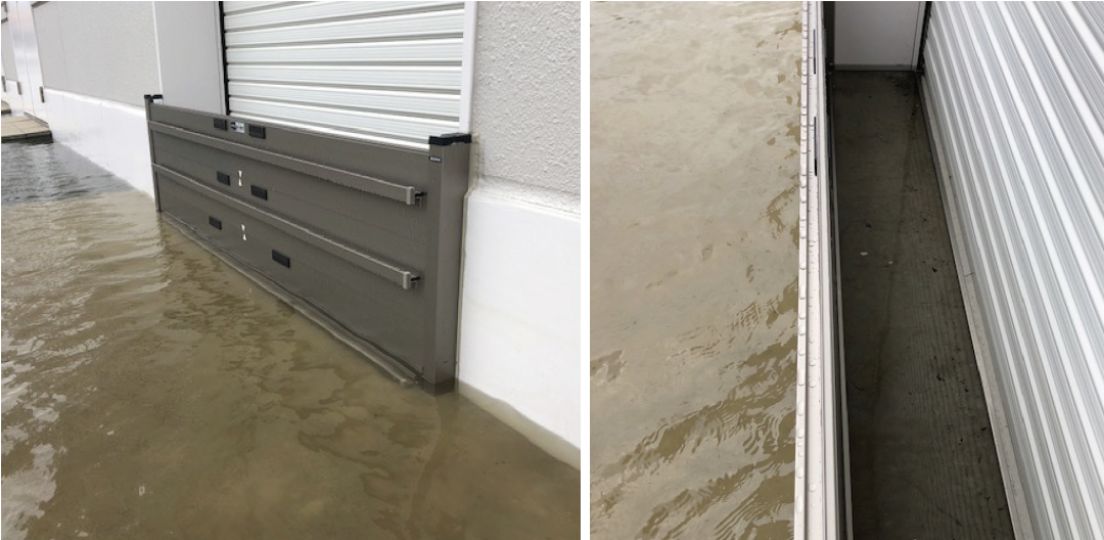
Based on our experience of disasters in the past, we are working to prevent and reduce damage by installing disaster countermeasure equipment (water stop boards, etc.) at high-risk stores.
In addition, when we open stores, we check the risk of water disaster from the hazard map and take measures such as raising the GL (ground level) and FL (floor level).
All stores and offices have taken out non-life insurance covering damage to products and equipment within the limits of the insured amount.
Countermeasure (risk ③⑦) <Reduction of GHG emissions through promotion of use of renewable energies>
In order to reduce greenhouse gas emissions, 100% of the electricity used at the Head Office was converted to renewable energy in July 2022.
We are also working to install solar power generation facilities at our stores through self-investment and on-site PPA, and we use the generated electricity at our stores.

Countermeasure (risk ⑦・opportunity②) <Waste Reduction>
As of the end of March 2025, Matsushita has introduced styrene foam compacter systems to 14 distribution centers throughout Japan to recycle styrene foam used as packaging for home appliances.
By reducing the volume of polystyrene foam that is disposed of as industrial waste, converting it into ingots, and recycling it as a high-quality recycled material, we are working to reduce waste plastic and greenhouse gas emissions during transportation.

Measurement index and target
From the Global Core Disclosure Indicators recommended by the TNFD, the following indicators are recognized as corresponding to the Company's dependence, impact, risks, and opportunities (excluding greenhouse gas emissions disclosed in accordance with the TCFD Recommendations).
In the future, we will consider data collection, disclosure of actual results, and setting of targets.
《Global Disclosure and Measurement Indicators for Our Group's Nature-Related Dependence and Impact》
The table below can be scrolled horizontally.
| Metric Number |
Drivers of change in nature |
Index | Measurement index |
|---|---|---|---|
| C2.2 | Contamination / Decontamination |
Waste Generation and Disposal | Total generation of hazardous and non-hazardous waste by type (ton) |
《Global Disclosure and Measurement Indicators for Our Group's Nature-Related Risks and Opportunities》
The table below can be scrolled horizontally.
| Metric Number | Category | Measurement index |
|---|---|---|
| C7.0 | Risks | Amount of assets, liabilities, revenues and expenses assessed as vulnerable to nature-related transition risks (total and as a percentage of total) |
| C7.1 | The amount (total and as a percentage of total) of assets, liabilities, revenues and expenses assessed as vulnerable to nature-related physical risks | |
| C7.3 | Oppor tunities | Amount of capital expenditure, financing or investment developed towards nature-related opportunities by type of opportunity |
| C7.4 | Percentage and percentage of revenue increases from products and services that have demonstrable positive impacts on nature, and a description of the impacts |
Future Initiatives
This is the first time that we have implemented information disclosure initiatives in line with TNFD. The content of these initiatives includes qualitative evaluations focusing on direct operations and other initiatives we have implemented thus far.
Based on the results of our analysis to date, we believe that the dependence on and impact of natural capital and biodiversity, as well as risks and opportunities in the Group's businesses, are highly related to climate change, and that the Group's responses to climate change are also common.
In the future, we will consider initiatives such as analyzing the entire value chain, quantifying risks and opportunities, disclosing indicators, and setting targets, with a view to integrating information disclosure in line with the TCFD Recommendations.